On the island of Lastovo in 2010
A Journey to Dark Skies on the Island of Lastovo In 2008, I learned about the dark skies on the Croatian island of Lastovo through a report from Slovenian astronomy enthusiasts.
This sparked my desire to spend a summer vacation in Croatia on the island of Lastovo.
The new moon in June 2010 finally arrived.
An opportunity to escape the white nights of Central Europe and observe the summer Milky Way under dark skies in the south.
The 800 miles journey from Stuttgart to Split is almost entirely possible via highways.
Before starting the trip, I checked the ferry departure times, and I’m glad I did.
There are only two car ferries to Lastovo each day. One of them departs from Split at 10:15 a.m., with a scheduled arrival on Lastovo at 3:15 p.m.
Under brilliant sunshine, the ferry journey took us past the islands of Brač and Hvar to the island of Korčula.
At the Vela Luka ferry terminal, which we reached after three hours, we transferred to a smaller ferry.
After another hour and a half, we arrived at the Ubli pier on the island of Lastovo.
In the late afternoon, we explored the island briefly by car.
We were staying at the island's only hotel, the "Solitudo."
At the Vela Luka ferry terminal, which we reached after three hours, we transferred to a smaller ferry.
After another hour and a half, we arrived at the Ubli pier on the island of Lastovo.
In the late afternoon, we explored the island briefly by car. We were staying at the island's only hotel, the "Solitudo."
After dinner at the hotel restaurant, the first night of observation got underway.
I drove to the southern tip—a small fishing harbor with a lighthouse known as Skrivena Luka (Hidden Bay)—and from there turned west onto a small coastal path.
After about 1 km, I felt far enough away from buildings and set up my 8" f/5 travel Dobsonian on the unpaved track next to the car.
A pair of 6x30 Kronos binoculars (12.5° field of view) and 12x60 Meopta binoculars (5.5° field of view) round out the equipment.
Observation report from June 8, 2010:
Twilight begins around 9:00 PM; I use the Dobsonian to observe the first visible planets: Venus, Mars, and Saturn.
Unfortunately, an outdoor light next to the lighthouse is switched on, disrupting my dark adaptation.
The lighthouse's rotating beacon faces away from my position and does not interfere.
I position the Dobsonian in the shadow of my car's open tailgate and cover the opening with a light-proof blanket.
There is haze extending up to an altitude of 10° above the surface of the Adriatic Sea.
Nevertheless, two brighter stars in the northern part of Centaurus are visible.
Using these stars—along with two stars in Serpens—as guides, it is easy to locate the galaxy M83. Through the 8-inch Dobsonian, I can see a star-like core and, using averted vision, two spiral arms. The magnification is 48x with the 21mm Pentax XL eyepiece; switching to the 11mm Chinese UWA (90x) yields no additional detail, as the spiral arms are only very faintly visible.
I then target galaxies in Leo:
Messier65 and Messier66, NGC 3628, Messier95, Messier96, and Messier105, as well as NGC 3384 and NGC 2903; I also observe NGC 3344, located on the "back" of the constellation Leo as it sets.
At 11 p.m., the constellation Scorpius hangs at an unusually high altitude above the Skrivena Luka lighthouse.
The globular clusters Messier4 and Messier80, along with the small NGC 6144, are the next objects viewed through the Dobsonian telescope.
Using binoculars, I admire the Milky Way stretching from Cygnus down to the region between Scorpius and Sagittarius.
After many hours on my feet, I decide to call it a night.
The next morning at breakfast, we asked for directions to the observation point on Hum.
I hadn't noticed the turn-off for the 417-meter-high Mount Hum the previous evening.
A rather alpine road with numerous switchbacks leads up to Hum, which is also the site of a Croatian Army radar installation.
A sign prohibits observation, photography, and entry. To its right, another sign points the way to the "Heliodrom."
About 500 m southeast of the summit and just 20 m lower down, slightly set apart, lies a level helicopter landing area measuring approximately 100 by 100 meters, offering magnificent panoramic views of the island.
This spot was visited again in the evening.
Observation report from June 9, 2010: At 9 p.m., I am back at the "Heliodrom" and setting up my Dobsonian telescope.
Having spotted a light on the summit the previous evening, I position myself behind my car, facing away from the radar station. Mindful of the previous night's experience, I applied Autan repellent, but unfortunately failed to protect the backs of both hands—an oversight that numerous mosquitoes took as an invitation to land.
In my desperation, I remember a pair of work gloves in the side compartment of the trunk.
Only with this protection is enjoyable observation possible.
As feared, at 10 p.m.—just as it gets truly dark—an outdoor light is switched on next to the radar station.
Away from that, and shielded by the tailgate and a light-proof blanket, the objects of my desire remain clearly visible in the opposite direction.
These are the constellations Corvus, Crater, Serpens, Centaurus, and Scorpius, which is currently rising.
By 10:30 PM, it is truly dark in the south.
The planetary nebula NGC 4361 in Corvus is my first target with the 8-inch Dobsonian.
At 48x magnification, it appears as a faint oval, with the central star visible via averted vision. At 130x, it is quite dim; more aperture would be desirable here.
I find the Antennae Galaxies quite easy to locate; they resemble two touching, oval spindles positioned at a 90-degree angle to each other.
To better assess the quality of the night sky, I aim the telescope at NGC 4565 in Coma. The galaxy is quickly found with the 8-inch Dobsonian; the dust lane is immediately clearly visible.
Now, however, back to the south and M83; this evening, the galaxy reveals its two spiral arms more clearly at 48x magnification than the night before, and a striking, round, nebulous disk is visible even in 12x60 binoculars.
About 3° south of M83, I attempt to observe NGC 5353, a dwarf galaxy located between Corvus and Centaurus. Using the 21mm Pentax eyepiece, an elongated patch of light is discernible via averted vision.
NGC 5102 is a galaxy located next to the star Iota Centauri; both remind me of Mirach's Ghost. To locate the galaxy, I have to move the star out of the field of view.
The globular cluster M68, situated south of Corvus, is a very beautiful and rewarding object at this location when viewed with an 8-inch aperture. At 48x magnification, the cluster is visible without showing significant central condensation. The stars at the edges are resolved, while the center appears grainy.
It is now midnight. The Croatian military has turned off the lights, and I am standing far away from any visible illumination beneath a magnificent starry sky.
Scorpius is culminating, and it is time to gaze at low declinations.
The Bug Nebula (NGC 6302) is my next target. At 48x magnification, I spot a small, elongated nebula; at 130x, its outline resembles a figure-eight lying on its side. I remembered this object looking somewhat more spectacular back in 1994.
However, a direct comparison is flawed: at that time, I was at the 35th parallel south of Agadir, Morocco, and was using a 10.1-inch Dobsonian telescope.I am glad to have found this object, which is not visible from Central Europe.
The Milky Way clouds glow magnificently, and dark regions stand out clearly. T
he Pipe Nebula is quite easy to see with the naked eye, and the center of the Milky Way in Sagittarius shines with unparalleled splendor. By the light of the Milky Way,
I can leaf through and read Gerhard Stropek’s observer’s atlas.
Through 6x30 binoculars, a delicate dark filament extends from the star Rho Ophiuchi, and its path can be traced all the way to the Pipe Nebula.
I can also make out a faint wisp where the Cat's Paw Nebula (NGC 6334) is supposed to be.
NGC 6231, an open star cluster at -42° declination, shimmers faintly—with a magnitude of 2.6—through the layer of haze above the sea.
The haze layer extends to an altitude of about 10°, just as it did the previous evening.
Except for the stars Theta and Eta—the two southernmost stars of Scorpius—I can see all the bright stars with the naked eye.
M7 and M8 appear as distinct, bright patches. M24 looks unusually bright, resembling a glittering bar.
Dark lanes in the Trifid Nebula are visible in an 8-inch Dobsonian at 48x magnification under these conditions, without a filter.
Then, I remain standing alone for quite a while, fascinated by the view of the Milky Way—both with the naked eye and through 6x30 binoculars with a 12.5° field of view—leaving the Dobsonian unattended.
After 2:30 a.m., fog begins to roll in over the sea and the coast.
Halos of light now appear above the houses of the village of Lastovo to the northeast and Pasadur to the northwest.
A wall of clouds has formed to the southwest.
Now is the time—before conditions deteriorate further—to look for Comet C/2009 R1 (McNaught).
I spot the comet low in the north-northeast; it is now positioned between the constellations of Andromeda and Perseus.
The remaining two days on Lastovo were sunny during the day, though unfortunately, the sky was consistently covered with cirrus clouds towards evening.
We visited almost every corner of the island during the day; only at one spot were we denied access by a barrier and barbed wire belonging to the Croatian army.
Until about twenty years ago, the island of Lastovo was a restricted military zone.
My wife was happy to have my company that evening.
This gave me the opportunity to taste wines from Lastovo. Plavac, a dry Dalmatian red wine, was my favorite.
I was very satisfied with the stargazing and was able to tick off many items on my observing wish list.
Conclusion: The journey was worth it for the fascinating views of the Galactic Center.
Expect some haze over the sea, wind gusts on Mount Hum, and the occasional visibility of illuminated military structures.
For small to medium-sized telescopes, the car's tailgate and a light-proof blanket are sufficient to shield against distracting lights.
Wearing full-coverage clothing and using Autan to prevent mosquito bites is advisable for nighttime excursions; those wretched critters nearly ate me alive on the first evening.
I would love to visit Lastovo again.
Next time, I’d like to have a 16-inch aperture telescope for the nights on Hum, and a diving mask and snorkel for the sea during the day.
The people on Lastovo are welcoming and friendly.
At the Hotel "Solitudo," you enjoy comfortable, high-quality accommodation that offers good value for money.
The island's wines and the food come highly recommended.
If you won't miss the rest of the world for a few days, Lastovo—a place of great beauty—is the perfect spot for you.

Arrived at the port of Split

The ferry to the island of Korčula

On the island of Korčula, you transfer to a small ferry.

Insel Lastovo in Sicht

Angekommen auf Lastovo

Auf der Hafenmauer von Zaklopatica

Beobachtungsplatz am Meer nahe Skrivena Luca

Auf dem Heliodrom vom Berg Hum

Blick vom 417m hohen Hum auf die Adria , nach Bari 200km.

Gegen Dämmerungsende auf dem Berg Hum
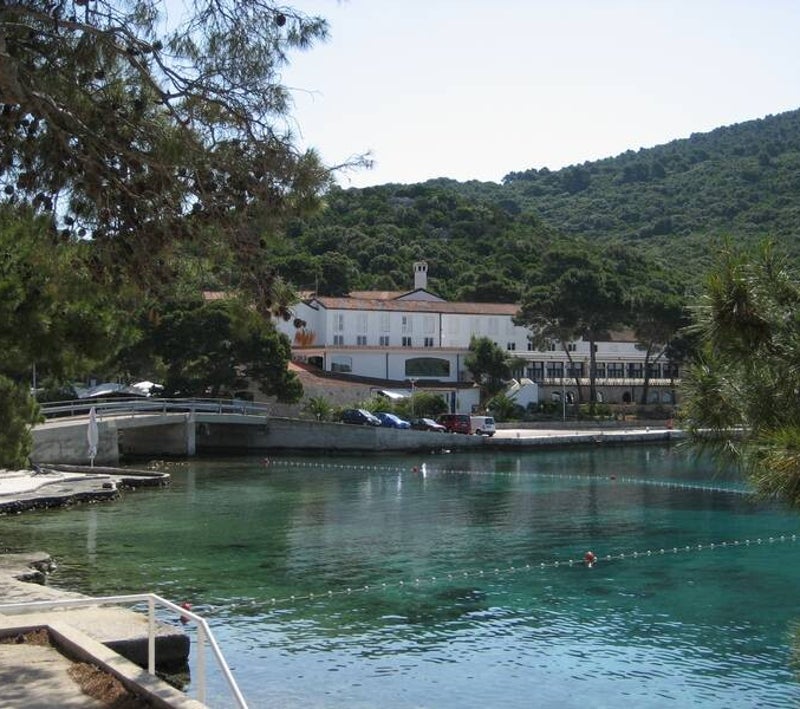
Unser Domizil das Hotel Solitudo
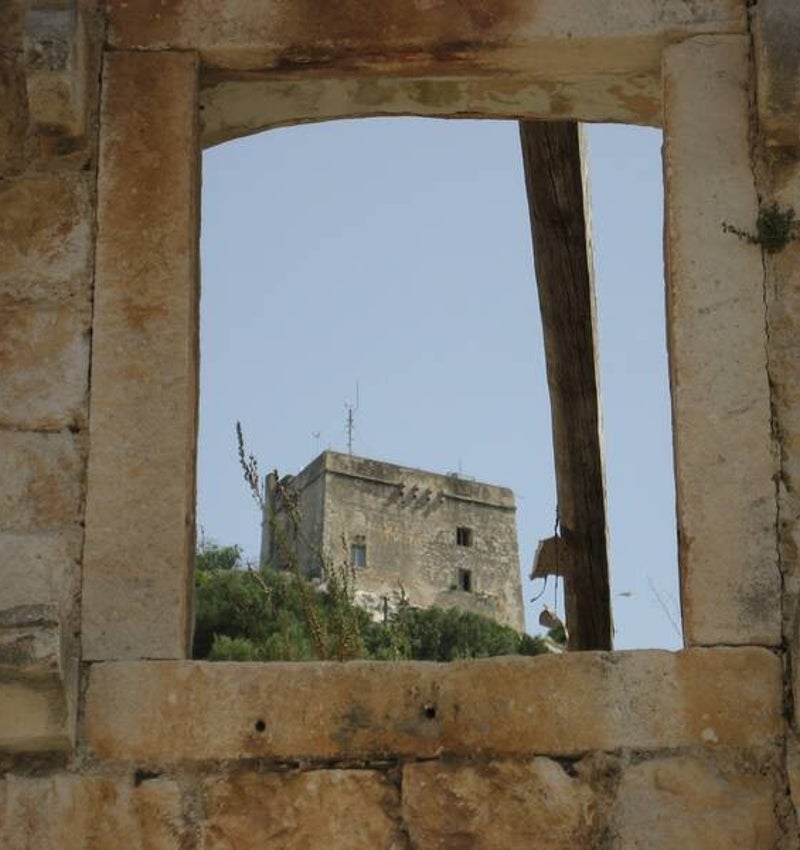
Schloss Lastovo

Der Badestrand vor dem Solitudo

Kleine Tour durch das Dorf Lastovo

Manche schöne Ecken sind erst auf den zweiten Blick zu erkennen
Gestrandet auf Lastovo? Aber gerne!

Erstelle deine eigene Website mit Webador